Making medication
routines easier.
An AI-powered companion that reduces the mental load of managing treatments for patients and caregivers.
01 · THE CHALLENGE
What if forgetting medication isn't really a memory problem?
The project focused on adults with recurring treatments and family caregivers who struggle with the cognitive load of managing multiple doses, schedules and responsibilities.
The opportunity was not to build another reminder app, but to reduce the mental effort required to stay in control of treatments and care routines.
02 · THE PRODUCT BET
I bet the bottleneck was setup complexity, not lack of motivation.
Cognitive load is a bigger barrier than lack of interest in treatment.
Separate a fast setup flow from an advanced setup flow.
Define a +40% onboarding completion lift as the threshold that would support the hypothesis.
03 · REDUCING SETUP FRICTION
Designing the first minutes to feel lighter.
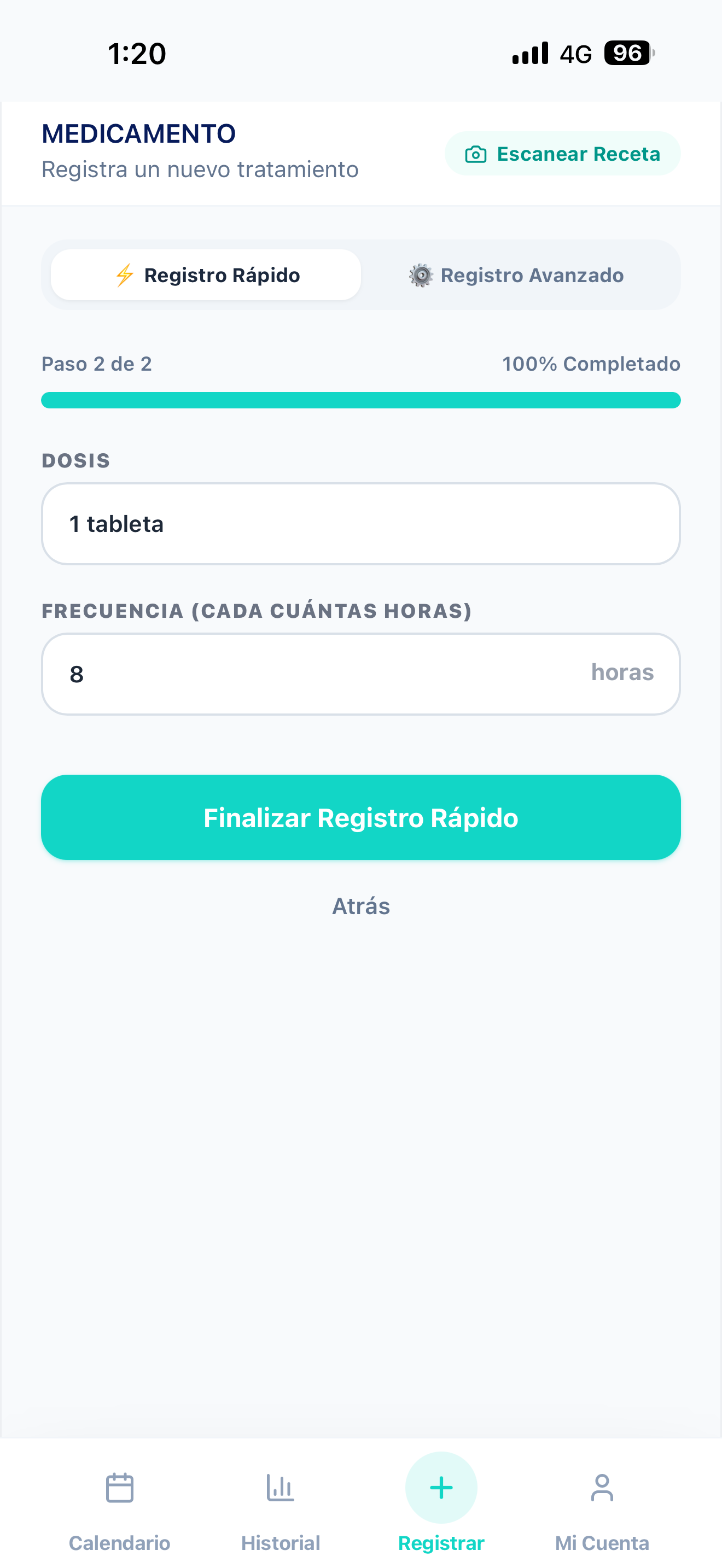
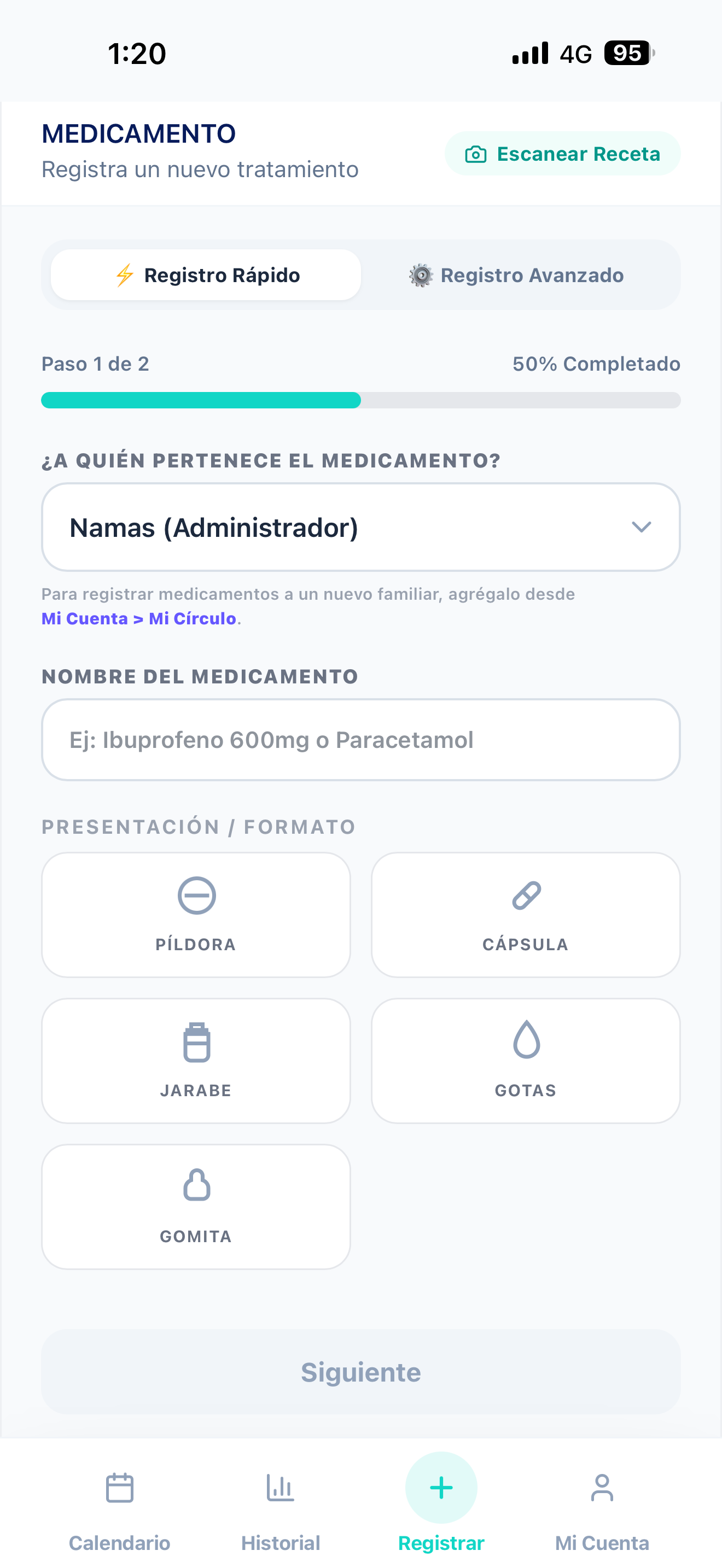
The registration flow separates “Quick Registration” from “Advanced Registration” so users can start with only the essential information and avoid unnecessary configuration upfront.
04 · DESIGNING AROUND REAL ROUTINES
From alarms to a daily treatment model.
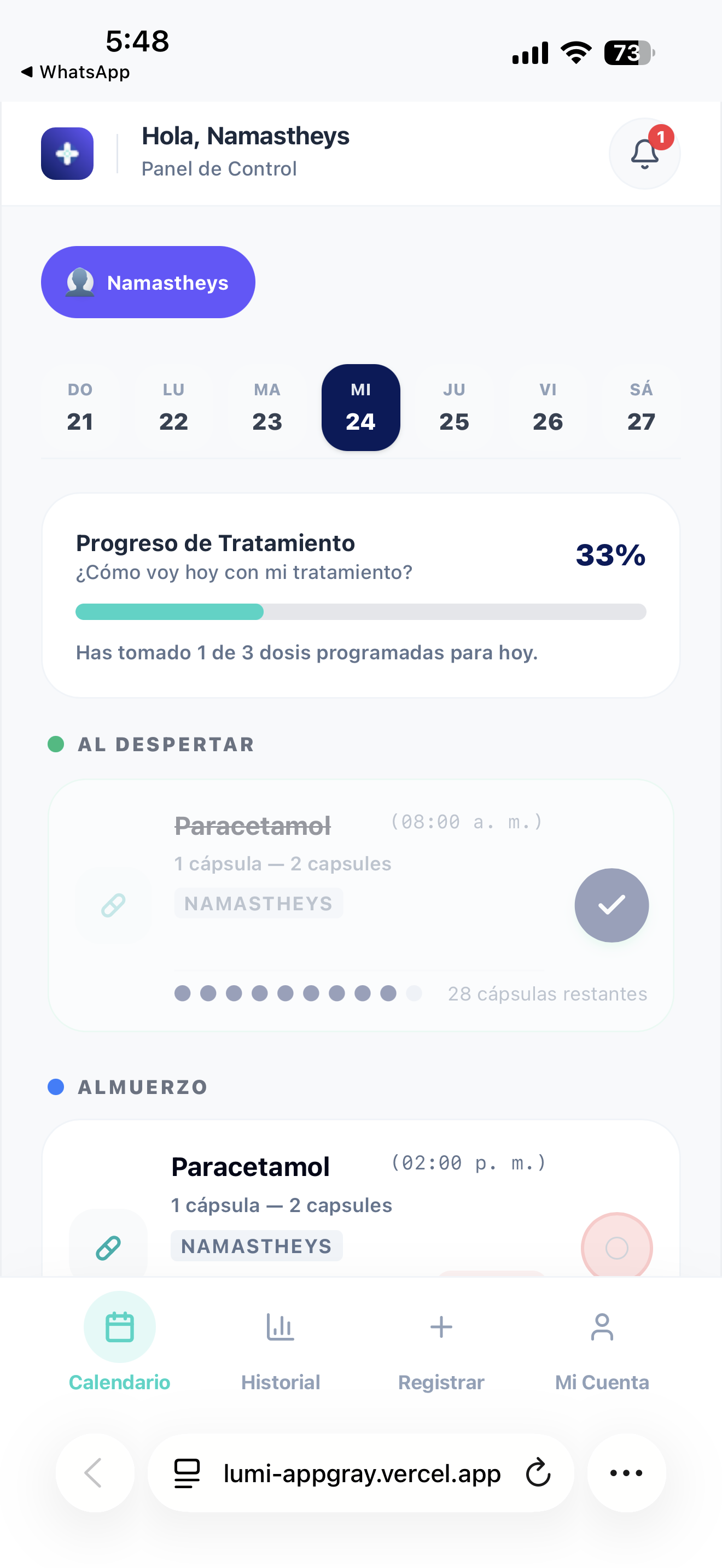
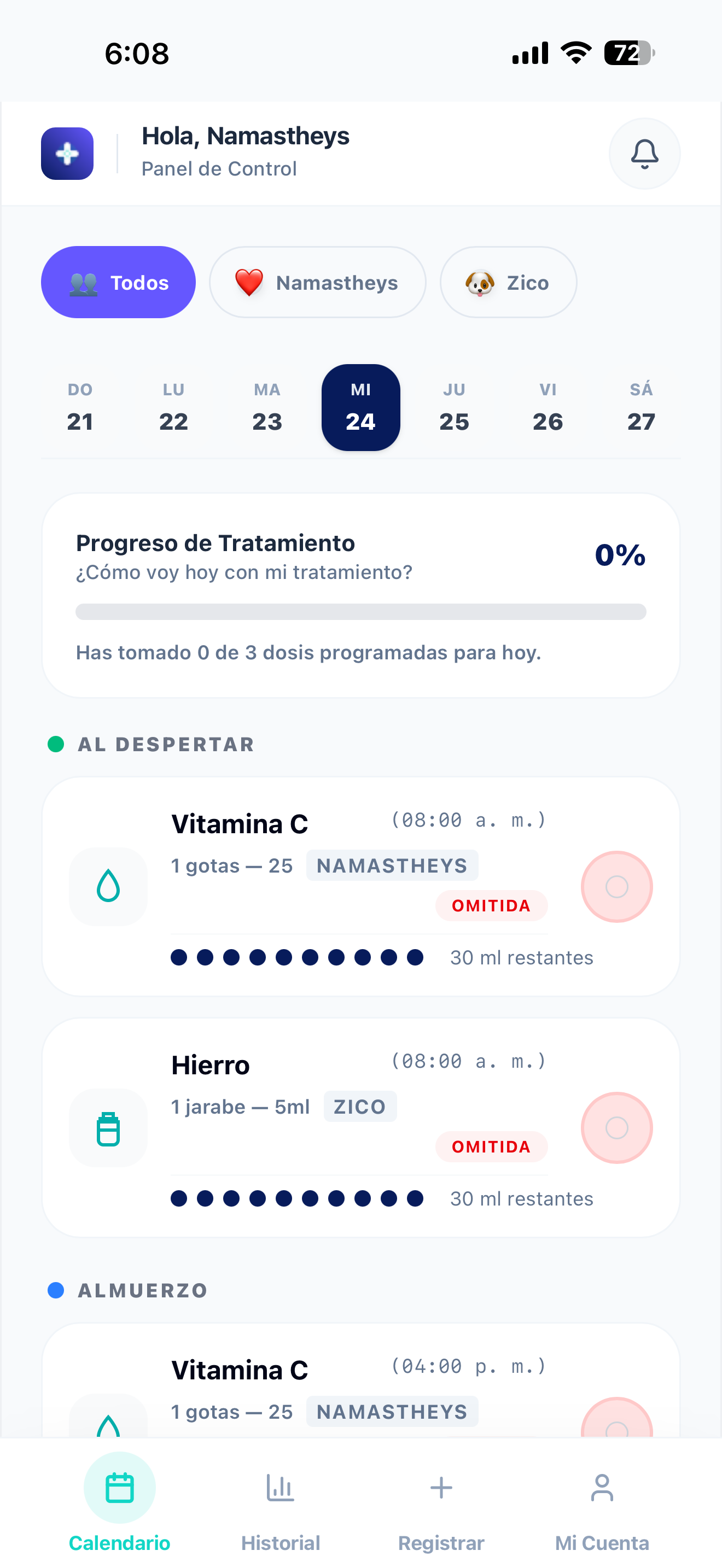
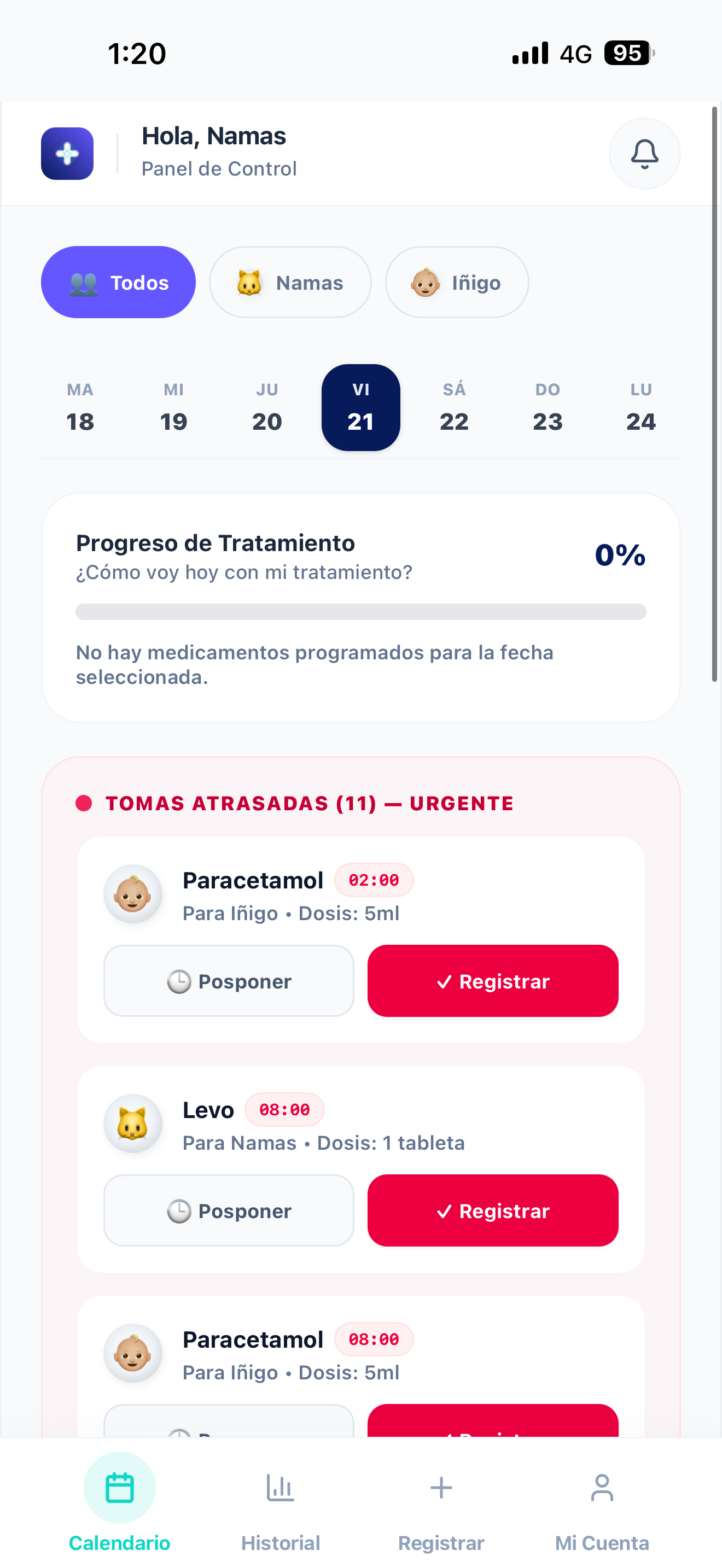
Instead of forcing people to think only in rigid clock times, Lumi organizes treatment activity around the structure of the day, makes progress visible and surfaces missed or overdue doses when attention is needed.
05 · CARE CIRCLE
Designing for care beyond a single user.
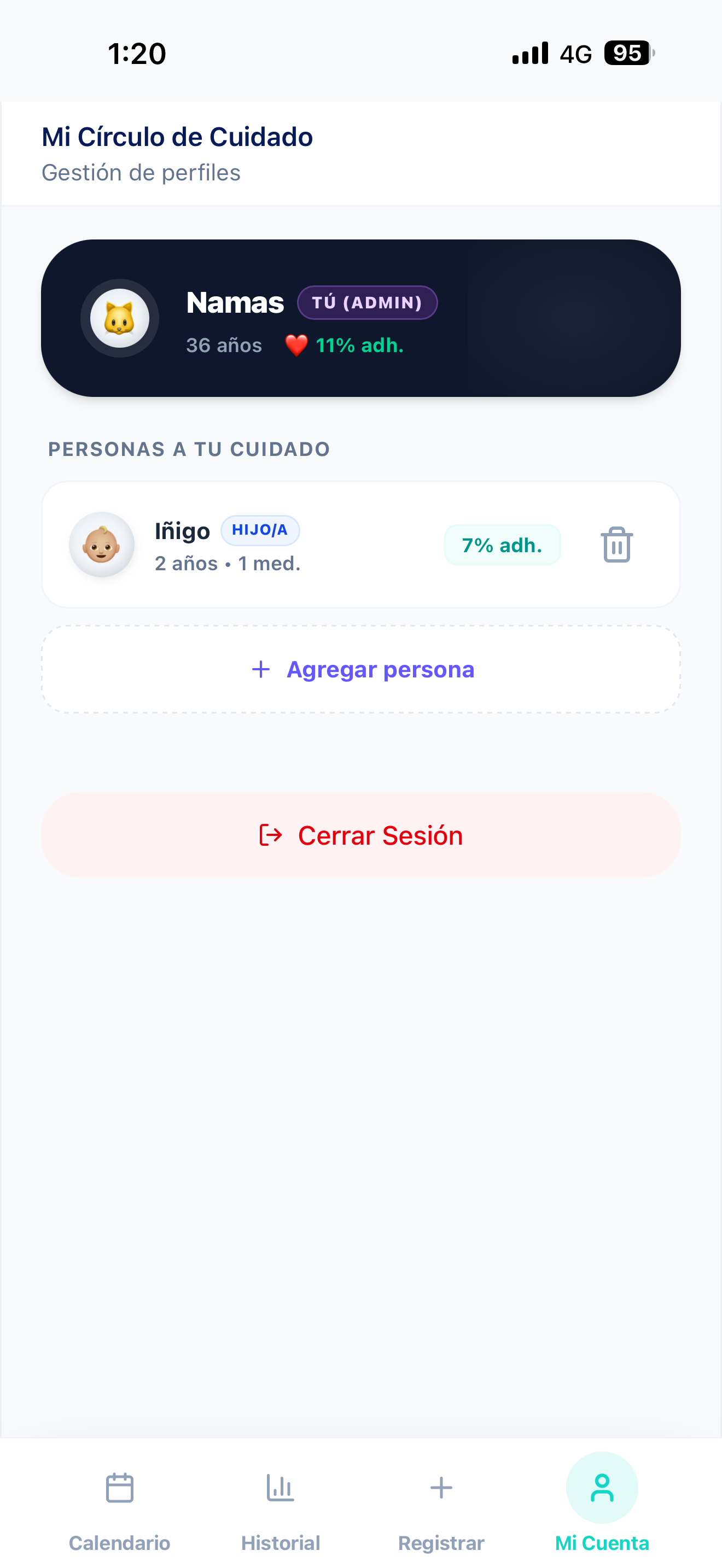
Lumi includes a Care Circle so one person can manage and monitor treatments for other people under their care, turning the product into a shared support system rather than an isolated personal tracker.
06 · DESIGNING AI THAT EARNS ITS PLACE
AI shouldn't just send reminders. It should understand context.
“Take your medication at 8:00.”
“Based on your Sunday delays, your reminder will arrive 15 minutes earlier.”
The product concept explores AI as a layer that learns from behavior, predicts likely misses and progressively personalizes support instead of simply adding another notification channel.
07 · MEASURING VALUE
Not downloads. Not registrations. Adherence.
The North Star Metric is the percentage of scheduled doses logged within the expected time window, because that is the behavior most directly connected to Lumi's value proposition.
08 · BUSINESS MODEL
Monetizing the reduction of cognitive load, not basic tracking.
The concept uses a freemium model: basic registration and standard reminders remain free, while advanced AI, adherence reporting, extra profiles and Care Circle capabilities become part of the premium value proposition.
09 · WHAT I VALIDATED
Validation without pretending synthetic users are real users.
The concept and prototype were tested with synthetic users to stress-test assumptions, identify obvious friction and refine the interaction model within the two-week academic timeframe.
The next step would be validation with real users to test onboarding completion, perceived value of intelligent support and whether personalization improves adherence over time.
10 · WHAT I LEARNED
Good AI product design starts with a behavior worth improving.
Lumi reinforced a product principle I want to carry forward: AI should not be added because it is available. It should reduce effort, improve decisions or create value that a simpler interaction cannot deliver.